Belts

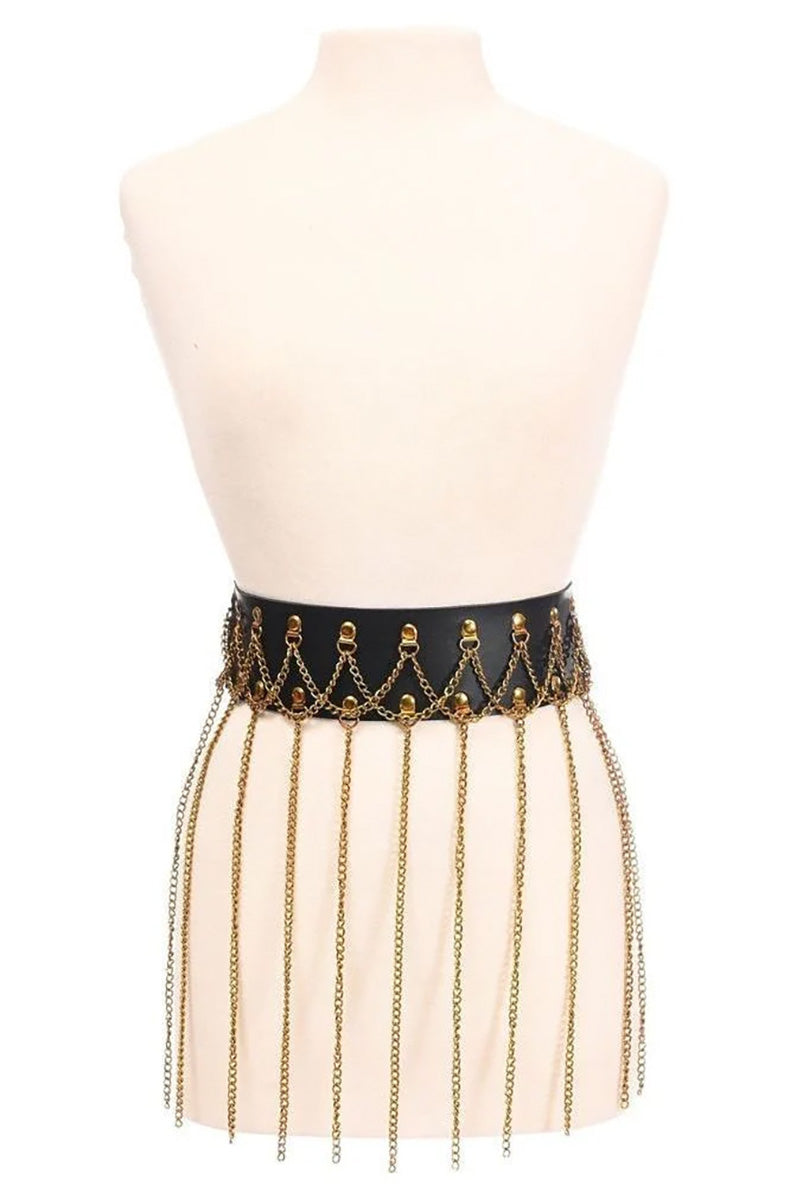
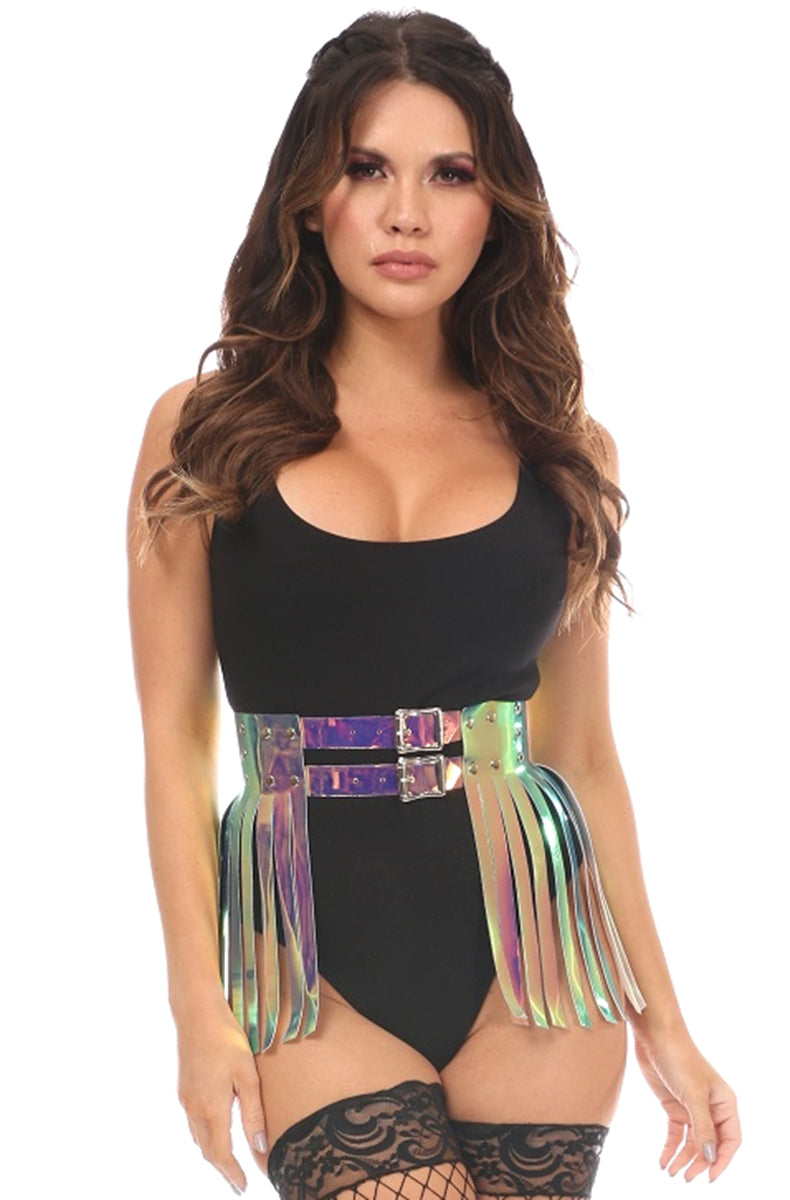
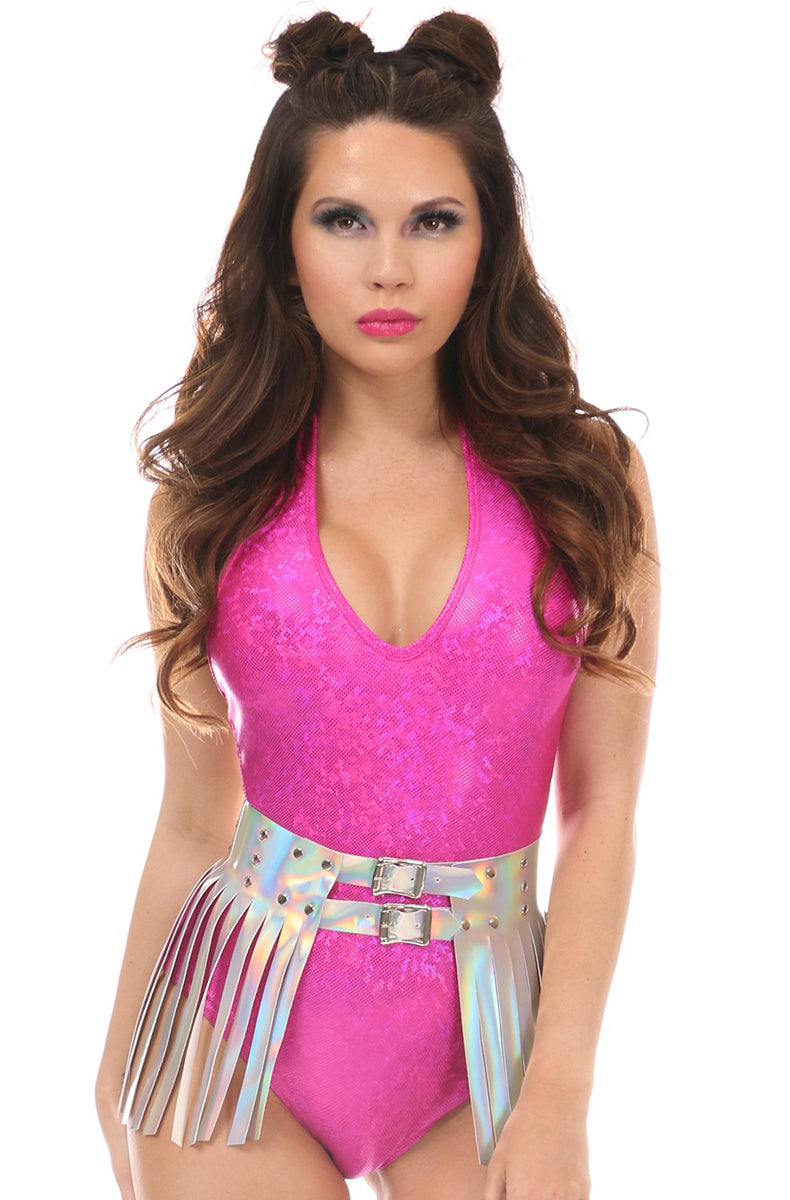
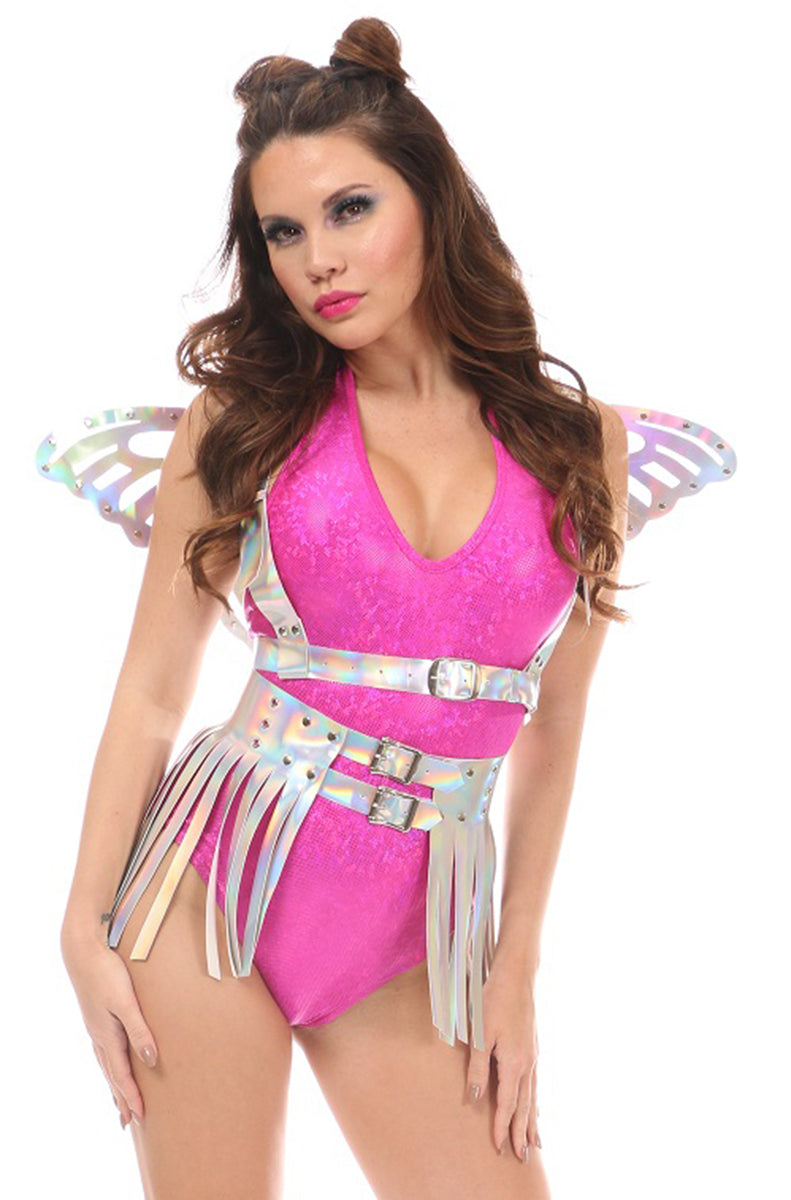
Festival belts are worn over an outfit, not to hold one up. Chain fringe skirts and holographic fringe skirts that sit at the waist over a bodysuit, a swimsuit or shorts, with adjustable chain and snap back waists.

Recently viewed

What is a festival belt?

A festival belt does the opposite of what a belt normally does. It is not there to hold up a pair of jeans. It sits at the waist as an outer layer, over a bodysuit, a swimsuit, a bralette and shorts or a leotard, and the piece underneath does the actual covering. The belt adds movement and a silhouette that a flat outfit does not have on its own.

Fringe is why it works on camera. A plain high-waist short photographs as a block of color. Put a layer of chain or holographic fringe over it and the whole lower half moves independently of you, which is the difference between a photo that looks posed and one that looks like it was taken mid-set. That movement is the entire product, and it is why these are cut short and hung loose rather than fitted.

Two practical things. The waist is the only fit question, and almost everything in this category adjusts, through a chain that hooks at a range of lengths or a snap back closure, so the size on the label matters less than it does anywhere else in apparel. And because these are an outer layer, decide what goes under before you pick one. Over a plain bodysuit the fringe is the whole look. Over a printed short it fights the print and both lose.

Types of belts

Grouped by what it is made of, with the rest of each one next door.

  • Chain fringe: metal fringe on a faux leather or chain waist. The heaviest of the group, and the one that moves in a slower, more deliberate way.
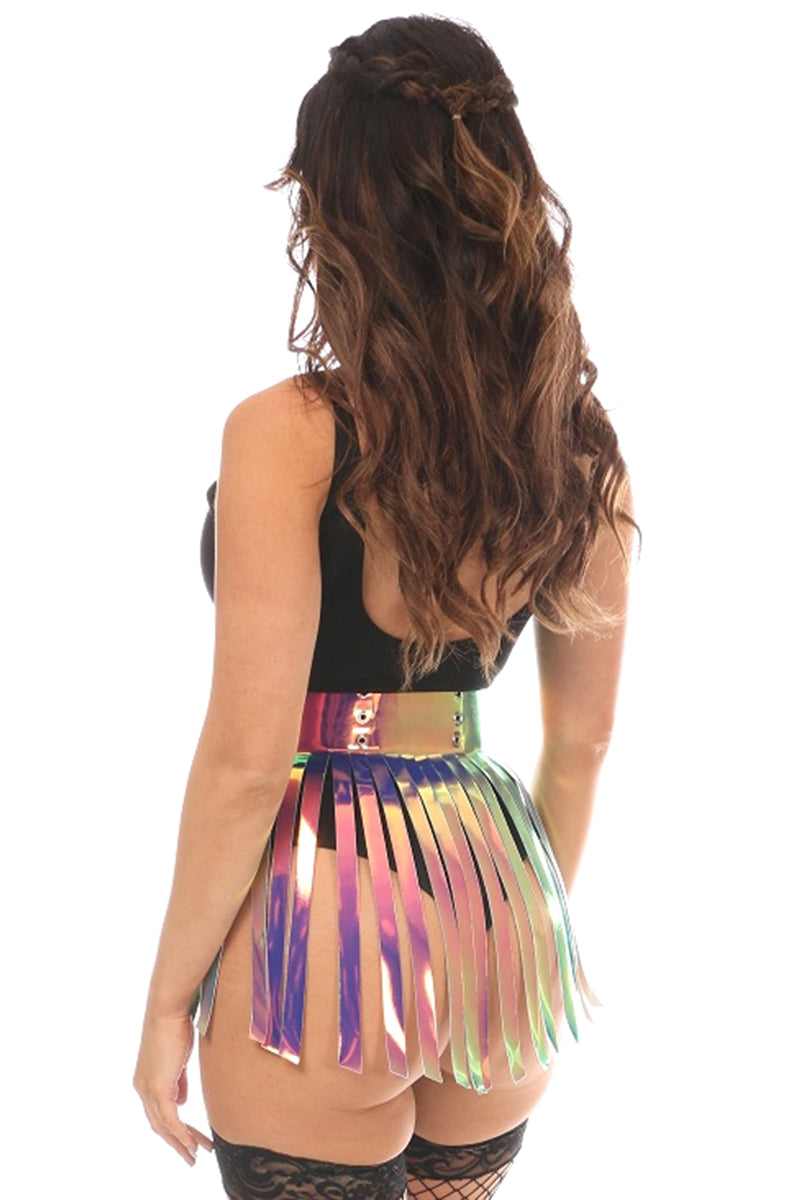
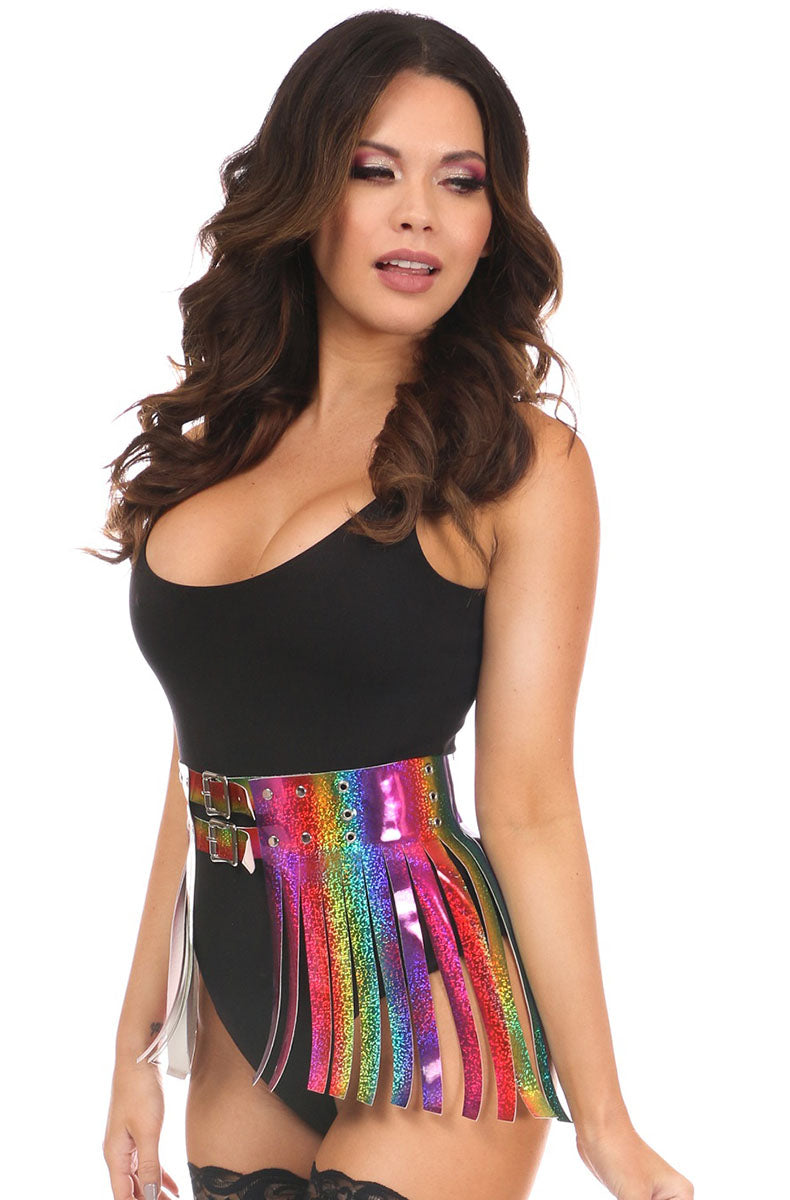
  • Holographic fringe: light vinyl fringe that changes color with the angle. Catches stage light and daylight differently, and weighs almost nothing in heat.
  • Festival bottoms: the high-waist shorts, skirts and chaps these get worn over. Start here if the outfit underneath is not decided.
  • Garter belts: the lingerie side of a waist piece, with straps down the thigh rather than fringe.
  • Harnesses: the same idea higher up the body. Straps over a top instead of fringe at the waist.
  • Swimwear and bikinis: what a lot of people put underneath, because it holds up to a day outdoors and reads as an outfit under a fringe layer.
  • Accessories: leg wear, body jewelry, glitter and bags. The rest of the finishing layer.
  • Festival and rave: the full range these belong to.

How to choose the right one

On sizing: the waist adjusts, so buy for the waist and nothing else. Chain closures hook at a range of lengths and snap backs give you a few settings. Length is fixed and short by design, which is not a sizing problem to solve.

On what goes underneath: plain beats printed. Fringe is the pattern. A bodysuit, a swimsuit or a solid short lets it read. A printed bottom underneath turns the whole thing into noise.

If you are dancing all day: holographic over chain. Metal fringe looks incredible and you feel every ounce of it by hour six. Vinyl moves the same way and weighs nothing.

If it is for photographs: chain, and stand still for a second. Heavier fringe hangs straighter and catches light in a cleaner line. Lighter fringe wins in video, where the movement is the point.

If you are new to layering: try it over something you already own. This is the cheapest way to get a second outfit out of a bodysuit you have already worn and posted. See festival bottoms for what pairs.